Room to Roar: Inside Greater Manchester’s Rehearsal-Space Boom

Photo: Mostafameraji, CC BY 4.0, via Wikimedia Commons
The most important venue in Greater Manchester right now might be a converted mill unit with a broken clock and a PA that smells faintly of dust. It does not have a stage. It does not have a bar. It has a waiting list.
In 2026, rehearsal space is the quiet bottleneck in the city’s music ecosystem. Gigs are plentiful, support slots are competitive, and everyone can record a demo on a laptop. What is harder to find is a room with a working PA, a drum kit that does not wobble, and an hour when nobody else needs it. That shortage is shaping how bands form, how they write, and how quickly they can say yes to a show.
The waiting-list economy
Dan Mercer runs a rehearsal studio in Salford with four rooms and a shared backline. He says the list has not been empty since early 2024. ‘We’ve got about forty bands waiting at any one time,’ he says. ‘Some want a weekly slot. Some just want a one-off before a gig. We try to keep the cancellation list moving, but it’s constant.’
The same story repeats across Levenshulme, Stockport, Trafford and the edges of Ancoats. Converted warehouses and mill units have filled the gap left by smaller rooms closing, but demand has grown faster. Hourly rates mostly sit between £12 and £25, depending on room size, backline and whether you are booking peak evening hours. For a five-piece, that is not nothing. For a band trying to rehearse weekly, it is a fixed cost that competes with strings, travel and the occasional van hire.
Priya Shah plays guitar in a four-piece that formed in Stockport last year. She says the room is the first thing they sort out after a gig is offered. ‘You get a support slot and everyone’s excited, then you realise you’ve got two weeks and no room. We’ve rehearsed in a living room with a practice amp and it’s not the same. You need to hear the drums properly.’
What an hourly lock-in actually buys
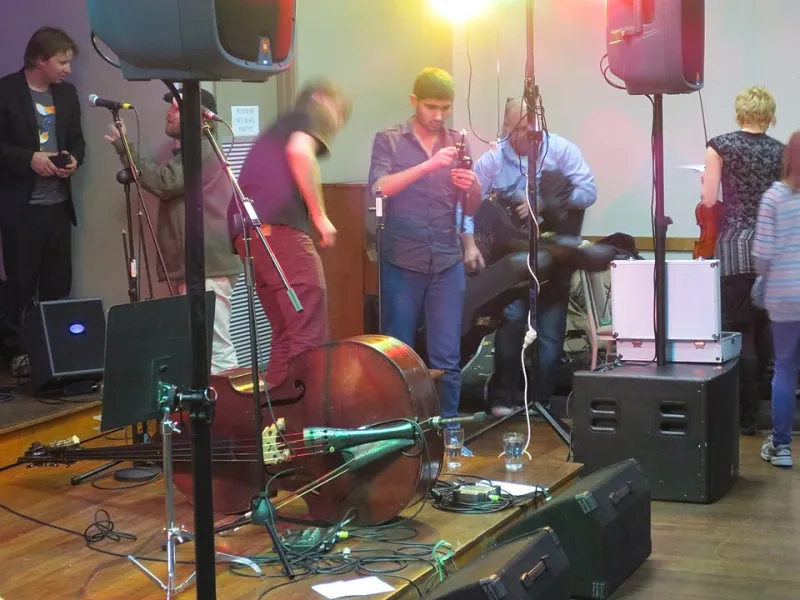
The best rehearsal rooms are not glamorous. They are practical. A working PA with enough inputs. A bass amp that can survive a loud drummer. A drum shell kit with a decent snare stand. Somewhere to leave a cab if you are lucky. A kettle if you are very lucky. The difference between a good room and a bad one is often a single piece of equipment that nobody wants to carry.
‘People think they’re paying for space,’ Mercer says. ‘They’re paying for a working snare stand and a PA that doesn’t clip. That’s what lets a band rehearse instead of troubleshoot.’
Shared amps have their own economy. Bands borrow, lend and label. Cables go missing. Settings get changed. The etiquette is unwritten but strict: ask before you touch a head, bring your own leads, leave the room as you found it, and do not assume the drum throne is communal. ‘The rehearsal room is a social contract,’ Shah says. ‘If someone breaks it, everyone hears about it.’
The room is the support slot
A support slot is twenty-five minutes. The room is the other sixty hours. That is the maths that emerging bands are doing in 2026. The gig gets the attention, but the rehearsal room is where the set is built, where the arrangement gets fixed, where the band finds out if the new song actually works. It is also where a lot of content gets made: phone recordings, group photos, the first proper demo.
Mercer says bands are booking further ahead than they used to. ‘We’ve got people booking six weeks out for a show. That used to be unusual. Now it’s normal.’ The result is a quiet professionalisation of the lower rungs. Bands are treating practice as a fixed commitment rather than a casual meet-up. That can be good for standards and bad for anyone trying to organise five people with jobs.
How to find a room in 2026
Call ahead. Ask about cancellation lists. Take an off-peak slot if you can. Share a room with another band and split the cost. Check the noticeboards in record shops and the socials of the studios themselves. Most places do not have a slick booking system; they have a phone and a spreadsheet. That is not a failure. It is just how the infrastructure works.
The boom is not really about property. It is about access. A room with a working PA can matter as much as a support slot, because without the room there is no set to support anyone with. In a city that loves a stage, the rehearsal space is where the next wave is actually happening. You just will not see it on a flyer.