Tape Runs and Postcode Scenes: Six DIY EPs Defining Manchester in 2026
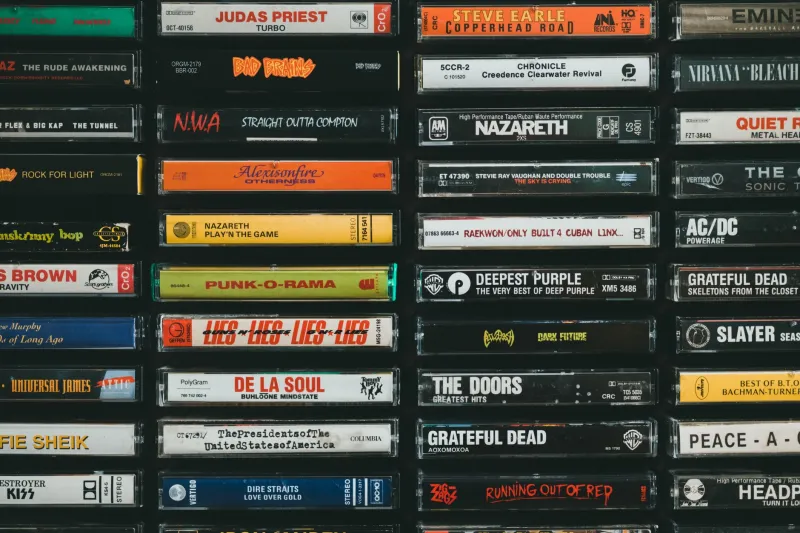
Manchester’s DIY release calendar in 2026 does not move in album cycles. It moves in tape runs of fifty, WhatsApp groups, and gigs announced a week out. The EP has become the calling card again: short enough to finish in a bedroom, cheap enough to press in a small run, and portable enough to sell from a rucksack at the back of a pub.
But the interesting story is not that people are making EPs. It is where they are making them, and what those releases do once they leave the bedroom. Across Greater Manchester, a handful of self-released records are mapping a city that is wider, stranger and more local than the usual Northern Quarter narrative. These six are not a ranking. Think of them as pins on a map.
Why the EP Still Runs the City
The EP is a practical format. It gives an artist something to sell, something to send to promoters, and something to play live without committing to a full album’s worth of studio time. In 2026, it also functions as a social object: a cassette with a hand-stamped label, a download code, a zine folded into the sleeve.
That matters because Manchester’s live circuit is still built on small rooms. A tape run of eighty can fund a rehearsal, a support slot, or a van to Leeds. It can also create a small, self-selecting audience that turns up to the launch gig because they already own the record. The EP is not just a release. It is a way of finding people.
M11: A Bedroom Producer Turns Notice into a Room
Nadia Rahim records as Low Ceiling from a flat in Levenshulme. Her 2026 EP, Shared Wall, is four tracks of hushed electronics and close-mic’d guitar, recorded over three months between shifts. The first tape run was eighty copies, with sleeves printed at a friend’s studio in Openshaw.
“I wanted it to sound like the flat,” she says. “You can hear the fridge on one track. I left it in because it felt dishonest to take it out.”
The launch show at Gullivers was the first time she had played the songs with a drummer. That translation is the critical test for bedroom releases: what works on headphones can shrink in a room. Low Ceiling’s answer was to slow everything down and let the space do the work. It worked. The tape sold out, but more importantly, the gig put her in front of a promoter who books a monthly night in Salford.
M14: Chorus Pedals and the Rusholme DIY Network
Hassan Ali’s project Half-Pint Choir is louder and messier. The Queue for the 192 EP is five tracks of fuzzed-up guitar and spoken-word samples, recorded in a shared house off Wilmslow Road. The tapes were duplicated by a friend in Longsight and sold at a gig in a Rusholme community hall.
“The postcode thing is not a marketing plan,” Hassan says. “It is just who is around. We borrow pedals from each other. We practise in the same room. The EP is a document of that, not a statement about M14.”
That distinction matters. Postcode scenes are often romanticised by people who do not live in them. In practice, they are networks of convenience and friendship: who has a spare amp, who can drive, who knows a printer. The EP is the visible tip of that invisible infrastructure.
M4: The Warehouse Tape That Refuses the Algorithm
Jules Mercer records as Concrete Sleeve in Ancoats. The Loading Bay EP is a 22-minute cassette of industrial dub and clipped vocals, released in a run of fifty with a folded poster. It has no social media campaign. It has a Bandcamp page and a single gig at The White Hotel.
“I do not want to be a content machine,” Jules says. “I want the tape to be the thing. If someone buys it, they have made a choice. That feels better than a playlist add.”
The critical angle here is not that DIY is automatically purer than the industry. It is that small-run releases can be insular. A tape of fifty can sell out to friends and create a false sense of momentum. Concrete Sleeve avoids that trap by playing live with a full rig, making the release a reason to gather rather than a substitute for gathering.
M32: A Stretford Screamo Trio and the 12-Minute EP
Damp Course are a three-piece from Stretford. Their 2026 EP, Bus Shelter, is twelve minutes long and sounds like it was recorded in a stairwell, because it partly was. The screen-printed sleeves were done at a kitchen table, and the launch gig was in a friend’s back room.
“Short is good,” says drummer Priya Shah. “We are not trying to be a album band. We want to play five songs in fifteen minutes and get off. The EP matches the set.”
That symmetry between release and live show is a recurring theme. The most effective DIY EPs in 2026 are not trying to imitate major-label rollouts. They are trying to solve a local problem: how do you get people in a room, and how do you give them something to take home?
M9: A Moss Side R&B Tape With a Zine Attached
Kofi Mensah records as Velvet Bus. His Night Bus Home EP is smooth, late-night R&B with a zine of lyrics and bus-route photography folded into the cassette case. The launch was at YES basement, with a live band and a DJ set from a friend.
“The zine came first,” Kofi says. “I had all these photos of routes I take home. The songs came after. The EP is basically a soundtrack to the zine.”
This is where DIY release culture gets interesting: the record is not the only artefact. The zine, the tee, the poster and the tape are all part of the same creative package. It is merch as world-building, and it gives the live show a visual language before the first note.
M18: The East Manchester Hybrid That Refuses a Genre
Ella Whitworth records as Taxi Rank in Abbey Hey. The Ring Road Psalms EP is a six-track mix of spoken word, post-punk guitar and cheap drum machine, released on a run of sixty tapes with a photocopied lyric booklet. The live show is just Ella and a guitarist, which makes the EP feel like a blueprint rather than a finished product.
“I like that it is rough,” she says. “If it was too polished, people would expect a big band. This way they expect two people and a lot of noise. That is what they get.”
The critical point is not that roughness is a virtue in itself. It is that the EP sets an honest expectation. Too many DIY releases overpromise and underdeliver live. The best ones in 2026 are the ones that sound like the gig you are about to see.
What the Map Actually Shows
Taken together, these six EPs do not add up to a single Manchester sound. They add up to a set of local conditions: cheap recording, small tape runs, borrowed gear, friend-run nights, and a live circuit that still depends on rooms with a capacity under two hundred.
That is the real story. DIY release culture is not a substitute for infrastructure. It is a response to it. When venues are under pressure and touring costs are high, the EP becomes a way to make something happen at home. It is also a way to find out who is paying attention.
The risk is that DIY becomes a filter. If the only people who can afford to press a tape, print a tee and hire a room are the ones with disposable income, then the scene narrows. The most interesting artists in this map are the ones who are using the format to widen the door, not guard it.
Manchester’s next wave will not be announced by a single release. It will be visible in the small rooms, the merch tables, the tape runs and the WhatsApp groups. The EP is just the receipt.