Paste-Up Prophets: What Manchester’s Flyer Walls Are Saying About the Next Scene
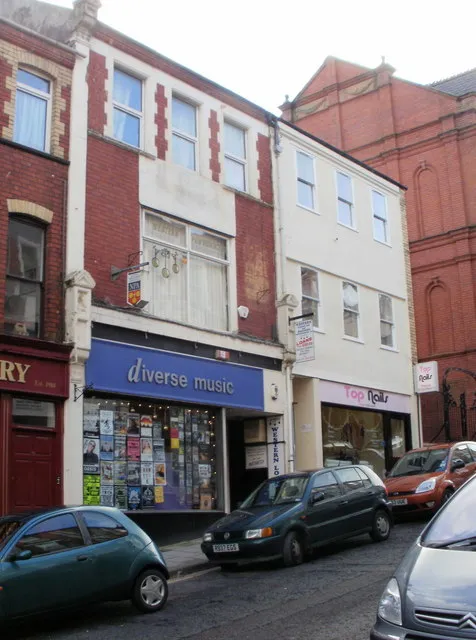
On a wet Thursday in November, the lamppost outside a Northern Quarter record shop is wearing three layers of paper. A monochrome A3 for a noise night in a basement. A fluorescent pink A5 for a guitar band with a support slot at a pub. A hand-stamped square for something called ‘soft launch, no lineup announced’. None of it is on anyone’s feed yet. All of it is already telling you something.
Manchester has never been short of places to stick a poster. What feels different in 2026 is how seriously people are reading them again. With algorithms flattening the way new music travels, the flyer wall has gone back to being a rough, physical early-warning system: messy, local and surprisingly honest about what is about to happen.
The wall is still an A&R desk
‘I can tell what kind of night it is from twenty feet away,’ says Mara Quinn, who promotes small-capacity shows across Ancoats and the Northern Quarter. ‘If it’s a clean grid and one colour, it’s probably a club night with a design friend. If it’s a photo of a band in a car park, it’s a guitar band. If it’s got no location and a QR code, it’s either very cool or very badly organised.’
Quinn says she walks the same route most weeks: Oldham Street, around the record shop noticeboards, up towards Ancoats, then over to Oxford Road. She is not looking for her own posters. She is looking for repetition. ‘You see the same name three times in different fonts and you think, someone is pushing this. That’s the bit that still works. A flyer isn’t just an advert. It’s a claim on space.’
Visual codes and print runs
Callum Reid designs flyers for bands and club nights, often in the same week. He says the visual language of a scene is usually settled long before anyone writes a press release. ‘A risograph in two colours says we care about the object. A glossy A3 says someone has a budget. A hand-stamped A6 says someone has a van and a friend with a stapler. None of those things are better or worse. They just tell you what kind of operation you’re dealing with.’
Print runs are a useful gauge. A local support slot might get 120 posters. A venue night with a touring guest might get 300. A festival warm-up or a label showcase can run to 500. The copy shop on Oldham Street that handles a lot of the smaller orders says the same names keep coming back. ‘You see a band print fifty in September and two hundred by November,’ the owner says. ‘That’s usually a sign something has moved.’
The route a poster travels
A flyer is not really a flyer until it has been moved. The route matters. It gets printed, collected, dropped at a record shop, taped inside a cafe window, stapled to a lamppost, photographed by someone who posts it with the caption ‘what is this?’, and then maybe it ends up on a bedroom wall. By the time the gig sells out, the poster has had a second life as a soft recommendation.
That route is also a filter. Promoters who only post online can reach more people, but they cannot leave a trace in the physical city. The people who still print know that a certain kind of audience needs to see a thing before they trust it. ‘A QR code on a wall is fine,’ Reid says. ‘But a QR code on a wall that someone has already ripped is better. It means someone cared enough to take it.’
What the paper is saying now
The walls are currently full of guitar bands with electronic pulses, ambient nights printed on handmade paper, rap nights with photo-led flyers, and jazz-adjacent shows using typefaces that look like old library books. The next sound is not one genre. It is a shared visual grammar: less polish, more texture, more collaboration between designers and promoters. You can see the same Illustrator file being reused across three different nights. That is not laziness. That is a scene forming.
The venues are part of it. YES, The Peer Hat, Gullivers, Soup and The White Hotel all have noticeboards or window space that function as unofficial listings. The Northern Quarter still has the highest concentration, but Ancoats is catching up, and Oxford Road keeps the student circuit honest. The flyers travel between them. A poster in one place is a rumour; a poster in three places is a schedule.
Why the walls still matter
The flyer wall is not nostalgia. It is infrastructure. It is where a new promoter tests a name, where a designer tries a colour, where a band finds out if anyone is paying attention. It is also where the city talks to itself without asking permission. In 2026, that is worth more than it looks. The next scene will probably be announced online, but it will be pasted up first.