The Threshold Critics: How Manchester's Door Staff Read a Gig Before It Starts
Photo: James Gordon from Los Angeles, California, USA, CC BY 2.0, via Wikimedia Commons
On a damp Thursday on a side street off Oxford Road, the queue for a 120-cap room is doing what queues do: shuffling, smoking, checking phones, pretending not to be cold. The door supervisor — let's call her Deb — has been on this door for six years. She has not heard a note yet. She has already decided the night will be fine.
Not because of the headliner's streaming numbers. Because the queue is chatting, not chanting. Because the advance list has fewer than a dozen names on it but the walk-ups are arriving in twos and threes. Because the soundcheck bleeding through the fire door has stopped sounding like an argument between a kick drum and a room.
'You can hear a band getting on with each other,' she says. 'You can hear a band getting on with the room.'
That's the thing about door work at Manchester's smaller gigs. The job title says security. The actual work is closer to crowd meteorology.
The Queue Is the First Review
Door staff read a queue the way a sound engineer reads a desk. Are people arriving early or late? Are they in groups or alone? Is there a hen party, a birthday, a gang of lads who have clearly started somewhere else? Is anyone carrying a supermarket bag with four cans in it and a look that says they've misunderstood the licensing laws?
At a 150-capacity room in the Northern Quarter, a door steward named Kev says the first ten minutes of queue time tell him more than the guest list ever will. 'You get a feel for whether people have come for the music or come for the night out,' he says. 'Both are fine. But they need different handling.'
He notices ticket chaos before anyone else. The person scrolling through emails while the queue builds behind them. The plus-one who isn't on the list but swears they were promised. The promoter's mate who has been told to 'just say my name' and has chosen a name nobody recognises. Door staff absorb all of it, usually without drama, while the band inside is still arguing about which DI box is broken.
Soundcheck Through a Fire Door
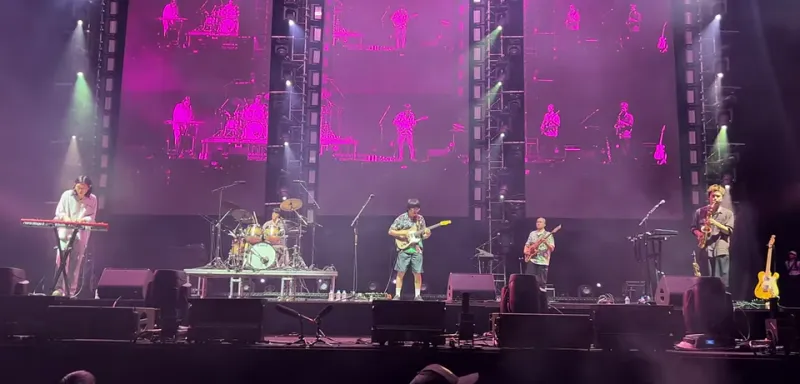
The door is also an ear. In older Manchester rooms — converted warehouses, back rooms of pubs, spaces above shops — sound escapes through fire doors, loading bays and badly fitted frames. Door staff hear the soundcheck in fragments. A vocal mic that keeps feeding back. A drummer who won't stop hitting the snare between songs. A bass player who has brought a rig that is, in the words of one Salford door supervisor, 'a bit ambitious for the room'.
'You can hear if they've done this before,' she says. 'Not the playing. The faffing. A band that knows what it's doing gets a sound, says thank you, and gets off the stage. A band that doesn't will still be asking for more monitor at doors.'
That doesn't make them bad. It makes them new. But door staff notice, because they spend the hour before doors listening to the same twenty minutes of repeated riffs and half-apologies. By the time the first punter arrives, the door has already heard the band's stress levels.
Reading the Room Before It Fills
The practical work starts before the first note and continues through the night. Door staff watch for the usual: glass on the floor, a crowd surging too early, a drunk person who has decided the barrier is a climbing frame. But they also watch for the quieter stuff. The person standing alone who looks like they might need a word. The couple having an argument by the merch table. The group whose energy is tipping from loud to loose.
'You're not looking for trouble,' says a door supervisor who works across two venues in Ancoats and the city centre. 'You're looking for the moment before trouble. That's the job. If you're dealing with trouble, you've already missed something.'
In small rooms, that means being visible without being heavy. Standing where people can find you. Knowing which promoter to tap on the shoulder. Knowing which band's mates are likely to try to bring in a carry-out. Knowing that the difference between a good night and a bad one is often a quiet word at the right time, not an ejection.
Professionalism You Can Hear
Door staff also become unofficial critics of a band's pull and professionalism. They know which acts bring a crowd that arrives on time and leaves without incident. They know which bands are polite to staff, which ones thank the door on the way out, which ones treat the venue like a hotel they're reviewing. They notice when a headline act's fans are lovely and when a support act's mates are a handful.
That knowledge travels. Promoters ask. Venues ask. Other door staff ask. It's not a formal review system, but it's a reputation economy, and it runs on the door.
'You remember the ones who are sound,' Kev says. 'Not just the music. The way they talk to you. The way they get their gear out. The way they tell their mates to calm down. That stuff matters.'
Why the Door Is Part of the Ecology
Manchester's gig ecology — the small rooms, the support slots, the midweek nights, the after-work crowd — depends on a lot of unglamorous labour. The door is part of that. Not just as a filter or a security measure, but as a listener. The first person to hear the band, in a sense. The first person to hear the night.
So next time you're at a small gig in Manchester and the person on the door gives you a look that suggests they already know how your evening is going to go, don't take it personally. They've been listening. They've heard the soundcheck. They've read the queue. They're probably right.