Last Bus Arrangements: How Manchester’s Deadlines Get Baked Into the Setlist
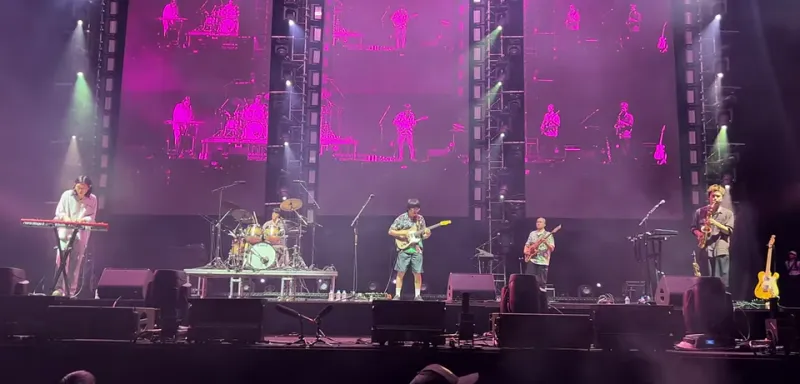
Photo: Ritikey30, CC BY 4.0, via Wikimedia Commons
At 22:47 on a Thursday in a Northern Quarter basement, a band is halfway through what should be their final chorus. The room is warm, the crowd is up for it, and the guitarist is about to take it round one more time. Then the promoter catches the singer’s eye and taps their watch. Not because the vibe has gone; because the 23:12 to Stockport waits for no one. The chorus lands once, cleanly, and the band are off. It is not the version on the record. It is the version that fits the bus.
That moment is repeated across Greater Manchester every week. The clock is not an afterthought in a live set; it is in the arrangement. A curfew, a last tram, a noise limit, a promoter’s changeover sheet — they all edit the songs before the audience hears them.
The 23:00 Edit
“We have a live version of our single that’s 38 seconds shorter,” says a guitarist from a Salford three-piece. “It’s not a radio edit. It’s a last-bus edit. We drop the second verse, go straight to the bridge, and the ending is tighter. Honestly, some nights it’s better.”
That is not a compromise born of laziness. It is a creative decision forced by a timetable. Promoters talk about “curfew sets” the way sound engineers talk about input lists: as a practical document that shapes the night. “I book three-band bills knowing the headliner gets a curfew set,” says a promoter who runs midweek shows in Ancoats. “If I don’t tell them, the sound engineer will. The room has a licence, the neighbours have windows, and the last bus has a timetable. None of those things care about your big finish.”
The result is a setlist that gets rewritten in the van, in the dressing room, or at the side of the stage. Songs get trimmed. Intros get cut. A long, atmospheric opener becomes a 20-second drone. A two-minute outro becomes a hard stop. Bands learn to treat their own songs like a promoter treats a running order: what can be moved, what can be merged, what can go.
Deadlines as Arrangement
The most obvious change is length, but the deeper change is shape. A song written for a record has a beginning, a middle and an end. A song played at 22:55 in a room with a hard stop has a beginning and an exit.
“You can gain four minutes across a set by cutting the gaps between songs,” says a front-of-house engineer who works across Manchester venues. “Not the songs themselves. The dead air. The tuning. The ‘how are we doing tonight’. The singer picking up the wrong guitar. If you tighten that, you can keep the songs and still hit the curfew. That’s the job.”
Some musicians take it further. Tempos creep up. Keys get adjusted so a song can end on a chord that doesn’t need a long fade. A band might rehearse a “bus version” of their set the same way they rehearse a stripped-back acoustic version for a radio session. It is not the same song, but it is the same DNA.
The Encore That Isn’t
The encore is where the clock is most audible. In rooms with a strict curfew, the encore is often planned as a fake ending: the band leave, the crowd claps, and everyone knows the lights are about to come up. Sometimes the band don’t even leave the stage. They just say thank you, put down their instruments, and let the applause fill the gap where a second song would have been.
“We used to plan a two-song encore,” says a drummer from a Manchester indie band. “Now we plan one song and a wave. If the room is with us and the promoter gives us the nod, we might do the second. But we don’t build the set around it. The last bus is the real headliner.”
That doesn’t always feel like a loss. A tight ending can be more satisfying than a loose one. The best Manchester gigs often treat the deadline as a structural device: the set builds towards a finish that is already in sight. The audience can feel the room closing, and that can sharpen the attention rather than dilute it.
Clocking the Desk
Sound engineers are the timekeepers nobody claps for. They watch the stage clock, the promoter’s phone, and the venue’s licence. They know that a 23:00 cut-off doesn’t mean the band stop at 23:00; it means the last note has to be ringing out before the noise limit bites.
“After 23:00 the room changes,” says the engineer. “You don’t just turn down; you change what you play. A quiet song can work. A big, loud finish might not. The band might not know that until they’re on stage. That’s why I talk to them before doors. We agree a plan. We agree a cue. We agree what happens if we run over.”
The plan is rarely written down. It is a nod, a hand signal, a countdown on a phone. But it is as much a part of the gig as the setlist. The clock is another instrument, and the engineer is the one mixing it.
Writing for the Last Bus
Some bands now write with the deadline in mind. Not consciously, not always, but the live arrangement starts to feed back into the writing. A song that works well when it’s trimmed becomes a song that gets trimmed on the record. A bridge that never survives the curfew gets cut in the demo. The room teaches the song what it can afford to lose.
“We wrote a three-and-a-half-minute single and a two-fifty live version,” says the Salford guitarist. “The live version is the one people sing back to us. It’s not because it’s shorter. It’s because it’s tighter. The clock made us edit ourselves. That’s not a bad thing.”
Manchester has always been a city of practical creativity: make the room work, make the night work, make the bus. The curfew is not the enemy of the song. It is the thing that decides which song gets the good ending. And on a Thursday in the Northern Quarter, with the 23:12 waiting, that ending can be just as good as the one on the record — sometimes better.