The Urn, the Raffle, the Room: Greater Manchester's Community Hall Gigs
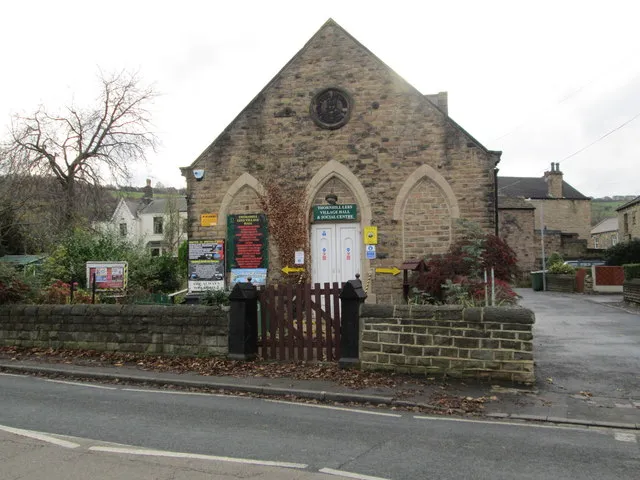
Photo: Betty Longbottom , CC BY-SA 2.0, via Wikimedia Commons
Doors are at seven. There's a urn in the corner, a table of raffle prizes near the fire exit, and a stack of plastic chairs that someone's uncle is already arranging into rows. Capacity is about eighty, if nobody brings a pram. The headliner soundchecked by playing one verse, then stopped, because the room was so quiet they could hear the kettle click off.
This is not a comedy bit about provincial gigs. It's a description of some of the best listening rooms in Greater Manchester right now. While the city centre argues about chatter, phone screens and whether the encore is dead, a parallel circuit of community halls has quietly got on with it. In 2026, if you want to hear a songwriter's breath catch before the second chorus, your best bet might be a scout hut in Failsworth.
The room writes the setlist
Nobody books a community hall for the acoustics. You book it because it's forty quid an hour, it has a kitchen, and it's free on a Thursday. Then you discover what the room does to sound.
Low ceilings swallow cymbals and bounce bass into a mush. Carpet kills the tail of a reverb pedal. A piano that hasn't been tuned since the Jubilee has a character all of its own. So bands adapt. Drummers switch to brushes or a cajón. Guitarists turn down. Someone inevitably says "we've never played it this quietly before" and then plays the best set of the year.
That constraint is the appeal. With no lighting rig and no sub-bass to hide behind, mistakes are audible — and so is intent. You can hear a band deciding to do something. That's rarer than it should be.
Three rooms, three ways of doing it
The scout hut on the edge of Failsworth. Bev runs the Friday nights here, and she'll tell you she's not a promoter. She's a retired school administrator who got tired of driving into town for gigs that finished after the last bus. So she started putting on folk, drone and the occasional experimental set in a hut with a serving hatch and a fridge full of cans. Capacity 70. Tickets £7, cash on the door, £5 for under-18s. "I don't do marketing," she says. "I do a WhatsApp group and I make a lot of tea."
A parish room off the A6 in Stockport. Anwar took this one over in 2024 after the previous organiser moved to Leeds. It seats 110, has a slightly raised dais that everyone treats as a stage, and a piano that is only marginally in tune. He runs a mixed bill: a local choir, then a jazz trio, then a young rapper from Reddish. It shouldn't work. It does, because the audience is there for the whole night rather than one act. "The dais helps," he says. "People can see. You'd be amazed how much of a gig is just being able to see."
A community centre in Tyldesley. Saturday matinees, 3pm to 5pm, done by half five. All ages by default, because there's no bar and nothing to age-gate. The audience skews older and younger at the same time: teenagers at the front on the floor, grandparents at the back on the good chairs. The promoter, Cath, describes it as "the only gig in Greater Manchester where nobody has ever asked me what the stage times are."
The economics of a raffle
A community hall gig doesn't run on sponsorship. It runs on a door split, a raffle, a brew table and a lot of goodwill.
Take a typical night: 65 paying adults at £8, a dozen concessions at a fiver, and £90 on the raffle. Subtract hall hire, the PRS for Music licence, insurance, and a fee for three acts. The promoter takes home roughly enough to cover the printing. Nobody is getting rich. That's the point. Because the overheads are low, the door money can go to the artists instead of the bar, the security and the lighting hire.
It also means the crowd is different. People who wouldn't pay £18 to stand in a dark room in the Northern Quarter will happily pay £8 to sit down in a well-lit hall with a slice of cake and a chance of winning a hamper. You get a genuine cross-section: mates of the band, curious neighbours, teenagers who've come because it's cheap, and a couple of people who saw the flyer in the post office.
All-ages by accident, not by policy
The all-ages thing is the quiet revolution. Because there's no alcohol licence to worry about, there's no reason to card anyone. A 15-year-old can stand next to a 70-year-old and neither of them thinks it's strange.
That changes the atmosphere. Younger audiences are often more attentive, not less — they haven't yet learned the habit of talking through the support act. And the presence of older listeners tends to keep the room polite in the best way. You get applause for a soundcheck. You get people shushing each other. You get, occasionally, a toddler dancing at the side.
It's also how scenes renew themselves. The teenager at the front of a community hall gig in Tyldesley in 2026 is the person booking the city centre venue in 2031. Somebody has to let them in first.
The awkward bits
Let's not pretend it's all pastoral. The chairs are uncomfortable. The heating is either off or tropical. The acoustics in a room with a low ceiling and a hard floor can be genuinely terrible if the band brings a full drum kit. Parking is a nightmare on match days. The last bus back from certain towns leaves before the headliner has finished, which is why so many of these nights start at 7 and finish by 10.
And there is a limit to what volunteers can do. Licensing paperwork, safeguarding, insurance, first aid — it's a lot to ask of someone who just wanted to put a gig on. Several of the rooms I spoke to said the same thing: they'd love to do more, but there's only so many evenings one person can give away for free.
How to be a good guest
If you're going to one of these nights, a few things help. Bring cash — card readers are patchy and the raffle is not contactless. Buy a brew even if you don't want one. Don't talk through the support act, because everyone can hear you and the room is too small for it to disappear into the mix. And when it's over, stack your chair. The promoter has to be up for work in the morning.
The city centre will always have the big rooms, the late licences and the lights. But if you want to hear what Greater Manchester's musicians actually sound like, unimpeded by a PA that's doing too much, the community hall is where it's at. Doors at seven. Bring a chair. Bring your nan.