The Quiet Bit: Manchester’s Gig Rooms Are Still Arguing About Chatter

Manchester is a talking city. On the tram, in the queue, at the bar, on the pavement after the last song — talk is part of the texture. At a gig, though, talk becomes a live issue. In 2026, the question of who gets to speak, and at what volume, is as much a part of the night as the setlist.
The short answer is that chatter is not one behaviour. It is a negotiation. The room sets the first draft, genre and ticket price revise it, and the artist and crowd enforce it — sometimes politely, sometimes with a glare that could strip paint.
The room writes the first rule
Venue shape does more to decide the listening contract than any sign on the wall. A low-ceilinged basement off Oldham Street turns a normal speaking voice into a stage-side broadcast. A long, narrow room with the bar at the back creates a corridor of clatter. A seated hall gives people permission to settle in; a standing room with a bright bar in eyeline gives them permission to treat the music as a backdrop.
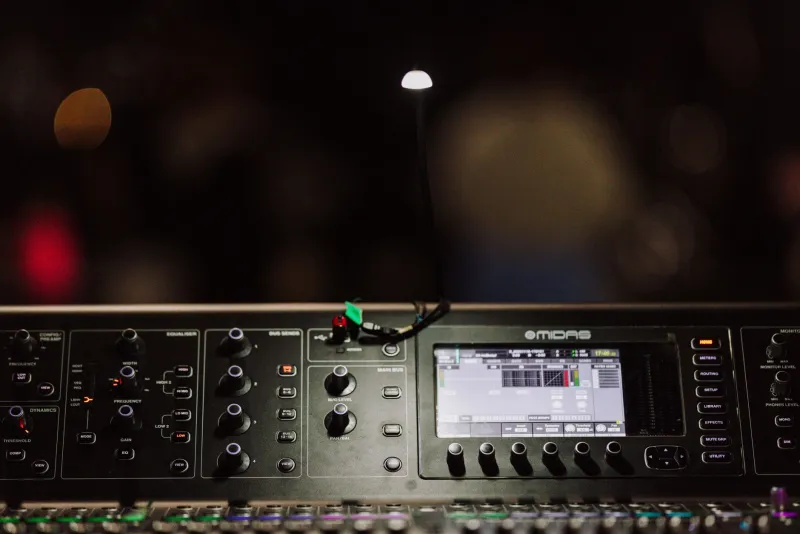
One front-of-house engineer who works across rooms in the Northern Quarter and Salford puts it plainly: if the bar is in the same room, you are programming a social space. You can ride the faders all night, but you cannot shush a queue for pints.
Volume is the other lever. A louder PA can mask chatter, but it also flattens dynamics. Quiet songs become a test of the room, not just the artist. Some engineers use volume like a bouncer — push the vocal up, pull the crowd down — while others accept that a certain level of murmur is the price of a busy night. The fader is not a moral instrument. It is a practical one.
Genre changes the contract
The same behaviour reads differently depending on what is happening on stage. At a folk or experimental show, a full conversation at the back is a rupture. At a raucous indie gig, the crowd is part of the arrangement; the room expects singing, shouting and the occasional pint-led bellow. The problem arrives in the middle ground — the quiet verse, the solo piano section, the support act who has not yet earned the room’s full attention.
Ticket price complicates it further. A free-entry night in a bar-led venue comes with a different set of expectations from a £20 ticketed show in a dedicated music room. Paying more can make an audience more attentive because they have committed to the night. It can also create a sense of entitlement: I have paid, so I will hold court at the back. The social contract is not just about money. It is about what the ticket promises — a gig, a night out, or both at once.
Polite signs and not-so-polite shushing
Rooms have tried most things. Laminated signs asking for quiet during sets. Pre-show announcements from the stage. Artists asking the crowd to come forward. Layout changes that put the bar behind a wall or the merch table away from the sightline. The best tactics are boring and structural: make listening the easy option.
The shush is less subtle. It can work in a listening room where the crowd has already agreed to the terms. In a standing room, it can start a fight. A shush from the stage is one thing; a shush from a stranger three feet away is another. It often lands hardest on people who are already trying to listen, while the loudest table at the back carries on undisturbed.
Some artists now frame the request directly: this next one is quiet, so please hold the chat for four minutes. It is not a demand for silence. It is a request for a temporary truce. In 2026, that feels like a fairer contract than a passive-aggressive sign by the toilets.
Better, or just louder?
Manchester’s listening culture is not getting worse in a straight line. It is getting more fragmented. There are more dedicated listening nights, more artists willing to ask for quiet, and more rooms that understand layout as part of the performance. There are also more multipurpose venues, more bar-led programming and more nights where the music is one ingredient in a broader social evening.
That is not automatically a problem. Chatter can be atmosphere. The low hum before a band comes on, the catch-up at the bar between sets, the shared reaction after a song — that is part of the night out. The issue is unmanaged chatter: the conversation that carries through the quiet bit, the table that forgets there is a stage, the room that never decided what it was for.
The best gig rooms do not demand silence. They make listening feel like the obvious choice. In Manchester, that is still the argument worth having — preferably not during the quiet song.