Before You Buy: The Practical Access Guide to Greater Manchester Gigs

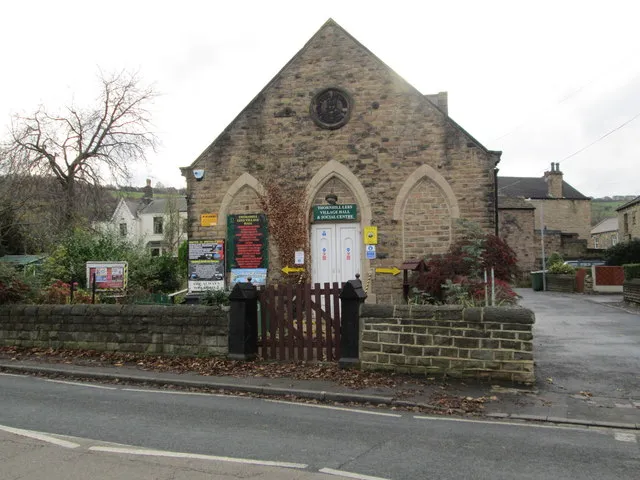
Photo: John Pannell, CC BY-SA 4.0, via Wikimedia Commons
A sold-out gig is only good news if you can actually get in, see the stage and use the toilet without a detour through a service corridor. For disabled gig-goers in Greater Manchester, that is not a niche concern. It is the difference between a night out and a wasted ticket.
The city has some genuinely good access work happening in its venues, from raised viewing platforms to named access contacts. It also has rooms where the information is buried three clicks deep, the step-free entrance is round the back, and the accessible toilet is being used as a storage cupboard. This guide is not a ranking. It is a set of practical checks to make before you buy, based on what promoters, venue staff and disabled gig-goers keep saying needs to be clearer.
Start with the entrance, not the poster
The first question is simple: can I get in without steps? A venue can have a beautiful stage and a terrible front door. Some Manchester rooms have level access at the main entrance. Others have a step-free route via a side door, a lift or a loading bay. The difference matters if you use a wheelchair, a rollator, crutches or a pram, and it matters even more if the route is not signposted on the night.
Check the venue’s own access page first, then ring the box office or the promoter if anything is unclear. Ask specifically about the entrance you will use, not just whether the venue is ‘accessible’. Door widths, thresholds, lifts and the distance from the drop-off point are all worth confirming. If the answer is vague, ask for it in writing or ask to speak to someone who will be on shift.
Sightlines and viewing platforms
Getting in is only half the job. Can you see the stage once you are inside? Some venues have a raised viewing platform or a reserved area with a clear sightline. Others have a flat floor, a high stage and a crowd that fills every gap. A good access view is not just about height. It is about having enough space to be safe, a route out if you need one, and a spot that does not put you in the middle of a mosh pit.
Ask whether the viewing area needs to be booked, whether it is stewarded, and whether a companion can stand with you. If the venue does not have a platform, ask about the best place to stand and whether staff can help you get there before the room fills up. Arriving early is not a failure. It is a practical move.
Toilets, companion tickets and the questions that matter
Accessible toilet provision varies wildly. Some venues have a clearly signed accessible toilet on the same level as the gig. Others have one that is locked, used for storage or reached by a lift that is not always staffed. Ask where it is, whether it needs a Radar key, and whether it is available during the event. If you need a Changing Places facility, check before you travel, because they are not universal.
Companion ticket schemes are also inconsistent. Some promoters offer a free companion ticket with proof of eligibility, some charge, and some do not advertise the scheme at all. The same goes for seating, medication, water and quiet spaces. The questions worth asking are straightforward: Is there a companion ticket? Can I bring medication and water? Is there a seat available if I need to rest? Who is the access contact on the night? What is the route to the accessible toilet?
The last mile
A gig does not end at the stage door. It ends at the tram stop, the bus stop or the taxi rank. Greater Manchester’s late-night transport is patchy, and the last mile can be the hardest part of the night. Check the tram and bus times before you go, and have a backup plan that does not rely on finding a taxi at 23:15 in the rain.
If you are being dropped off, ask the venue where the nearest accessible drop-off point is. If you are getting the tram, check whether the stop is step-free and how far it is from the venue. If you are using a taxi, ask whether the venue has a rank nearby or a safe waiting point. These are boring details, but they are the details that decide whether the night ends well.
What venues get right, what they miss
The best venues make access information easy to find, name a contact, brief their staff and treat access as part of the event, not an afterthought. They answer emails before the day of the show. They do not move the accessible viewing area because a camera crew needs the space. They understand that a step-free route is no use if it is blocked by a merch table.
The common misses are familiar: information that has not been updated, staff who do not know the access route, tickets that do not mention the companion scheme, and rooms that assume everyone can stand for three hours. Disabled gig-goers are not asking for a different night out. They are asking for the same night out with the basic information up front.
A practical checklist
Before you buy, check the venue’s access page and ring the box office if anything is unclear. Ask about the step-free entrance, the viewing area, the accessible toilet, the companion ticket and the access contact on the night. Check the last tram or bus and plan your drop-off. Arrive early if you need to, and do not feel awkward about asking staff to help you find the route. A sold-out room should still have a way in. The best venues know that. The rest need to catch up.