The 11.45pm Calculation: Manchester Nights Planned Around the Tram Map
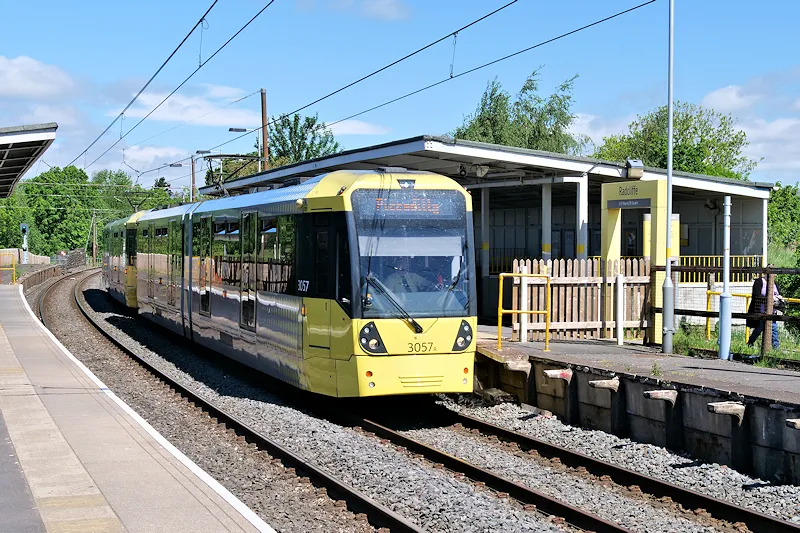
Photo: David Dixon , CC BY-SA 2.0, via Wikimedia Commons
Every gig night in Greater Manchester contains a hidden calculation, and it goes roughly like this. Headline on at 9.20. Forty-five minutes, maybe fifty if there's a break for a tuning issue. Then the walk, then the platform, then the last service — which is somewhere between half eleven and midnight on most lines, give or take, and earlier on a Sunday.
If the arithmetic doesn't work, people don't go. It's that simple, and it's the least discussed force in the city's live music geography.
Transport draws the map
Scenes don't cluster by accident. They cluster where it's cheap to get home from, and in a city that has spent the last few years rebuilding both its tram network and its bus franchising, that means the map looks different from the centre outwards.
Central Manchester gets the headlines because central Manchester is walkable from Piccadilly, Victoria, Shudehill and a dozen bus stops. But a functioning scene needs somewhere to play that isn't a fifteen-minute walk from a station at five past midnight — and that's where the tram lines earn their keep. Every stop out is a small town's worth of potential audience, and every venue within a short walk of one has quietly become a destination rather than a local.
North: the Bury line
The Bury line is the strongest argument for the whole theory. Twenty-five minutes on a good day from Victoria, high frequency, and at the end of it a proper venue that has been a fixture for decades, programming everything from folk and jazz to tribute nights and comedy. A show there isn't a city-centre show with a longer journey; it's its own evening, with its own audience, and it finishes early enough for people to actually get home.
The stops along the way matter too — Prestwich, Whitefield, Radcliffe all sit within reach of small rooms and social clubs that would never pull a crowd from town but do perfectly well from three tram stops in either direction.
East: the Ashton line
Head east and you get the other model: a compact, unmistakable live room a short walk from the stop, with a reputation built on loud nights and a stage that fits a full band. The Ashton line is slower, with more stops, but it delivers you to a venue that has been doing this long enough to know what it is.
The trick with the eastern route is the return timing. Leave on the wrong tram and you'll be watching the last song from a window, so the sensible move is to know the departure before you order a second drink, not after.
South: Chorlton and the long goodbye
South Manchester has the most sociable version of the tram night. Two or three rooms within a few minutes of a stop, all of them small, all of them making their money on a full room rather than a full price. You can arrive at eight, see the support properly, and be on a platform before the last service without once looking at the clock in a panic.
The trade-off is scale. These rooms aren't built for a five-hundred-capacity night, which is exactly why they're good — the sound is close, the bar queue is short, and the band can see who's listening.
The Quays and the walking night
Out west, the pattern bends around the Quays and the interchange at Cornbrook, which is less a stop than a game of consequences. The upside is that you can string two or three venues into one evening on foot and still have a route home. The downside is that the last leg is always the one you didn't budget for, and a missed connection at the interchange costs you half an hour you didn't have.
The last-tram problem
Here's the honest bit. Metrolink does not run all night. Outside New Year's Eve, the network winds down, and the last services are early enough that a lot of gigs simply cannot be attended end-to-end by anyone relying on it.
That's a structural fact with cultural consequences. It shapes set lengths, curfews and start times more than any licensing negotiation. It pushes audiences towards the centre. It makes the difference between a scene that is merely far away and a scene that is genuinely unreachable.
The mitigation is the bus network. Since the Bee Network took over franchised services, the late-night picture has changed shape — more consistent timetables, capped fares, contactless tap-on — and a growing number of people now plan a night around a night bus corridor as readily as a tram stop. It's slower, but it goes later, and later is worth a lot.
Three rules for planning it
First, work backwards from the last service, not forwards from the doors time. If the headline set doesn't fit, see the support and leave — nobody will judge you, and half the room is doing the same.
Second, pick one stop and commit. A night that hops between lines on the assumption that everything will connect is a night that ends up watching the second half of one band from a platform.
Third, treat the walk as part of the timetable. Two hundred metres in the rain at half eleven is not the same as two hundred metres at eight, and every regular knows it.
The city's best rooms are not all in the centre, and they never were. The tram didn't create that. But it decided which ones you can actually get to — and that's a line on the map worth reading before you buy a ticket.