The Clap Trap: Why Manchester's Sharpest Gigs Are Ending Without an Encore
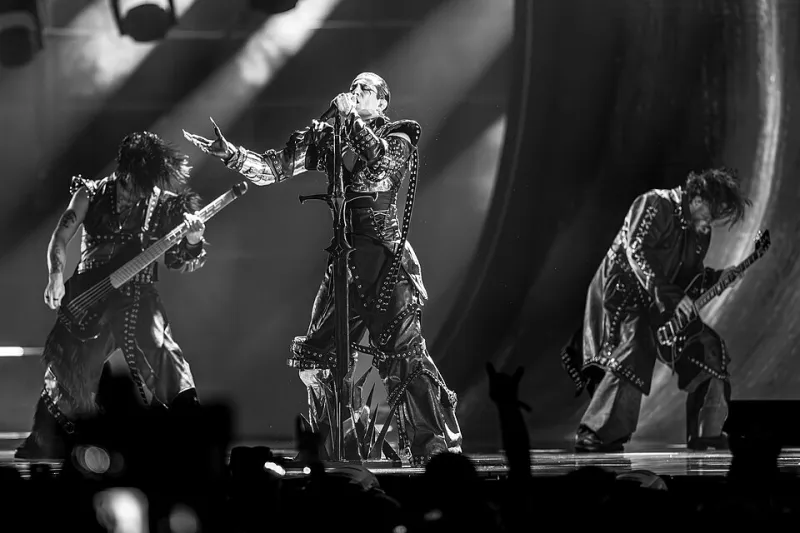
Photo: Quejaytee, CC BY-SA 4.0, via Wikimedia Commons
There is a very particular silence in a Manchester venue when a band finishes, says goodnight, and then simply does not come back. The house lights stay down for a beat too long. Someone near the front starts a clap. It dies. And then the room works out, collectively, that the gig is over — and everybody is fine with it.
That silence used to be a negotiation. Now, increasingly, it is the whole point.
Across the city's small and mid-sized rooms this year, the encore has been quietly retired. Not banned, not banned-with-a-press-release, just left off the running order like a support act nobody booked. The band play their last song, they mean it, they leave. No pretending. No two-minute break behind the PA stack while the crowd does its bit.
A Ritual Borrowed From Somewhere Else
It is worth remembering that the encore is not a Manchester tradition. It is a touring tradition that Manchester adopted. The word itself comes from the French for 'again', and it started life as a genuinely spontaneous demand in eighteenth and nineteenth-century concert halls — audiences who wanted more, and performers who obliged because they could. By the time rock and roll got hold of it, the spontaneity had been priced out. The encore became a scheduled event that pretended not to be scheduled, which is a strange thing to build into a night out.
In a 200-capacity room on a Tuesday in the Northern Quarter, that theatre is starting to look expensive. Not in cash — in time, in goodwill, in the last tram.
The Curfew Does Not Care About Your Big Finish
Ask anyone who promotes gigs in Greater Manchester and they will bring up the same three things within the first minute: licensing, the last train, and the neighbour who has your venue's number.
A promoter who runs a small room off Oldham Street put it plainly. 'A two-song encore is twelve minutes minimum, and that's if the band are quick. Twelve minutes is staff wages, it's the sound curfew, it's the difference between a smooth load-out and a queue of people who missed the 23:20.'
Doors at seven, headliner at nine, done by half ten. That is the architecture of most nights in this city, and the encore is a room extension nobody can afford. When the schedule is already this tight, a scripted pause reads less like generosity and more like poor planning.
What the Desk Hears
Sound engineers, who spend the encore standing behind a desk with nothing to mix, tend to be the least sentimental about it.
'By the time they come back on, the room's already half-dressed for the street,' one engineer told us. 'Half the crowd are on their phones ordering a taxi. You're playing to a thinning audience and a house music cue you're trying not to trigger early. And there's always a feedback risk, because nobody soundchecked the guitar they've just picked up out of spite.'
Engineers also point out the thing audiences rarely clock: the best-sounding part of a set is usually the one the band have rehearsed to death in a unit off Trafford Park. The encore is often the loosest, scrappiest, most under-rehearsed ten minutes of the night, performed by tired people to a distracted room. It is not the climax. It is the afterthought wearing a climax's jacket.
The Set List Is Telling the Truth Now
Here is the practical shift. Bands used to write a fourteen-song set with the encore baked in as songs thirteen and fourteen, then hide them. Now a lot of them are just writing fourteen songs, playing them in the order that actually works, and ending on the one they want to end on.
That is not a downgrade. It is an honest set list. And honest set lists tend to be better shaped than ritual ones, because the band are no longer saving their best song for a moment that might never arrive if the crowd is flat.
A guitarist who plays in two Manchester bands said the change came from the audience, not the stage. 'People stream everything. They know how long a set is meant to be. They can see the running time on the door. Clapping for a band to come back on when everyone in the room knows the band are coming back on — it feels like clapping for a bus you can already see.'
The Crowd Is Not Arguing
This is the part that would have been unthinkable fifteen years ago. Audiences are not booing. There is no outcry, no aggrieved post-gig forum thread. If anything, there is relief — the pleasure of a gig that ends while it is still winning, rather than one that dribbles into a shrug.
The economics of a night out have changed too. People are paying for a ticket, two pints, a tram, and a babysitter. A band who respect that by finishing on the strongest song they have, with the lights coming up and the merch desk already staffed, are giving the audience a better deal than a band who ask them to stand about for ten minutes in the dark performing enthusiasm for a decision that was made in a rehearsal room three weeks ago.
Where the Encore Still Earns Its Keep
None of this is a universal law. In the bigger rooms — the Albert Hall, the arena-adjacent shows, the ones where people have travelled in and the night is an event rather than an errand — the encore still works. There is a scale at which the ritual becomes genuinely communal again, and at that scale you would be daft to bin it.
But the small rooms are where Manchester's scene actually lives, and in those rooms the encore is increasingly dead weight. What is replacing it is something more interesting: a decisive ending. The band play the song. They mean it. They go.
There is a craft to that, and it is harder than it looks. A final song has to carry the whole night on its back, with no second chance and no theatrical reset. When it lands — and in this city, more often than not, it does — you get something the encore could never give you: a room that knows exactly when it peaked, and gets to walk out still holding it.